Over 5,000,000 Pieces Sold Worldwide – Loved by Families Across the Globe
Email: olivia@ykjuyi.com Phone/wechat/whatsapp: +86-18329060573

Author: Site Editor Publish Time: 2025-10-24 Origin: Site


When you invest in a PU diaper changing pad, you're counting on it to be waterproof, wipeable, and long-lasting. But even the best PU changing pad needs proper care. In this article, we’ll show you how to clean and maintain a PU baby changing pad, preserve its waterproof surface, and keep it safe for your baby.
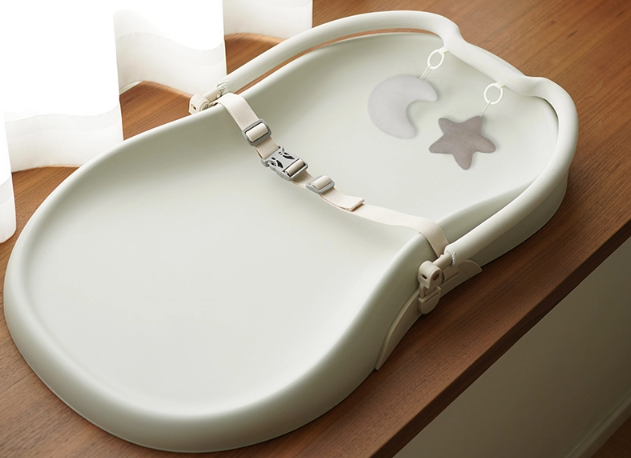
PU (polyurethane) surfaces are synthetic “leather-like” films that resist water and are relatively easy to clean. But they can degrade, crack, or discolor if mistreated.So, your cleaning approach must be gentle but effective, balancing hygiene and material protection.The recommended starting method is “wipe off any loose dust/dirt, then proceed with a warm water + neutral (non-bleach) soap solution (about 90% water / 10% soap)” using a soft cloth or sponge.It warns to avoid harsh chemicals, acetone, bleach, or abrasive scrubbing, which can damage the film. ≤ 70% isopropyl alcohol is acceptable for disinfection (with care), but higher concentrations may risk swelling the coating.
Here’s a recommended routine for your wipeable diaper changing pad:
Remove solids and residue:Use a disposable wipe or paper towel to pick up any solid matter immediately.
Wipe with mild soapy water:Mix a mild, fragrance-free dish soap (or non-bleach fabric detergent) with warm water (~90% water, 10% soap). Apply with a soft microfiber cloth or sponge. Use gentle strokes. This is the core of PU changing pad cleaning.
Optional light disinfection:If desired, you can use a 70% isopropyl alcohol wipe or baby-safe disinfectant spray. The “Recommended cleaning agents” guide suggests ≤ 70% alcohol is acceptable (but avoid pooling or long dwell times).
Dry immediatelyWipe with a dry, clean towel until surface is dry. Do not leave it damp or fold while wet.
Use a soft sponge and the same mild soap solution to gently scrub the entire surface, paying attention to seam edges and contoured parts.Rinse carefully, either via a damp cloth or light spray, but avoid soaking the core—excess water could seep into foam beneath the surface.Air dry fully in a ventilated area; ensure no moisture remains.
If minor odors persist, you can lightly mist a diluted vinegar solution (1 part white vinegar to 3–4 parts water), then wipe and dry, though vinegar does not disinfect (so follow up with a disinfection step if needed).
✅ What to Do | ❌ What to Avoid | Why |
Use soft microfiber cloths or sponges | Use abrasive scrub pads or brushes | Abrasives scratch or damage PU film |
Use neutral, mild soap (non-bleach) | Use bleach, acetone, or strong alkaline cleaners | Harsh chemicals degrade or discolor the PU surface |
Use ≤ 70% isopropyl alcohol for disinfection | Use > 70% alcohol or leave alcohol to pool | Higher concentration or long dwell time can damage the coating |
Dry immediately with soft towel | Use high heat | Moisture retention or heat can warp or delaminate layers |
Inspect surface regularly for cracks or peeling | Ignore early signs of wear | Damaged areas can trap bacteria or further deteriorate |
Store flat, away from direct sun & heat | Fold sharply or place near radiators | Sunlight/heat can make PU brittle over time |
These best practices support long life for your PU baby changing mat.
Even with excellent care, PU pads have a finite lifespan. Consider replacing your PU baby changing pad if:
You see cracks, peeling, flaking, or hardening of the surface
There is persistent odor that doesn’t resolve with cleaning
The cushioning or foam core loses its shape or becomes uneven
The waterproof surface is compromised or appears permeable
At that point, it’s safer to invest in a new pad rather than risk bacteria growth or skin irritation problems.The baby's skin is very delicate and sensitive, so parents need to take good care of it. If you are looking for a skin-friendly and comfortable diaper pad, you can consider our products:https://www.aibedobaby.com. If you have any questions, please contact us by olivia@ykjuyi.com or +86-18329060573 and we will do our best to serve you.


